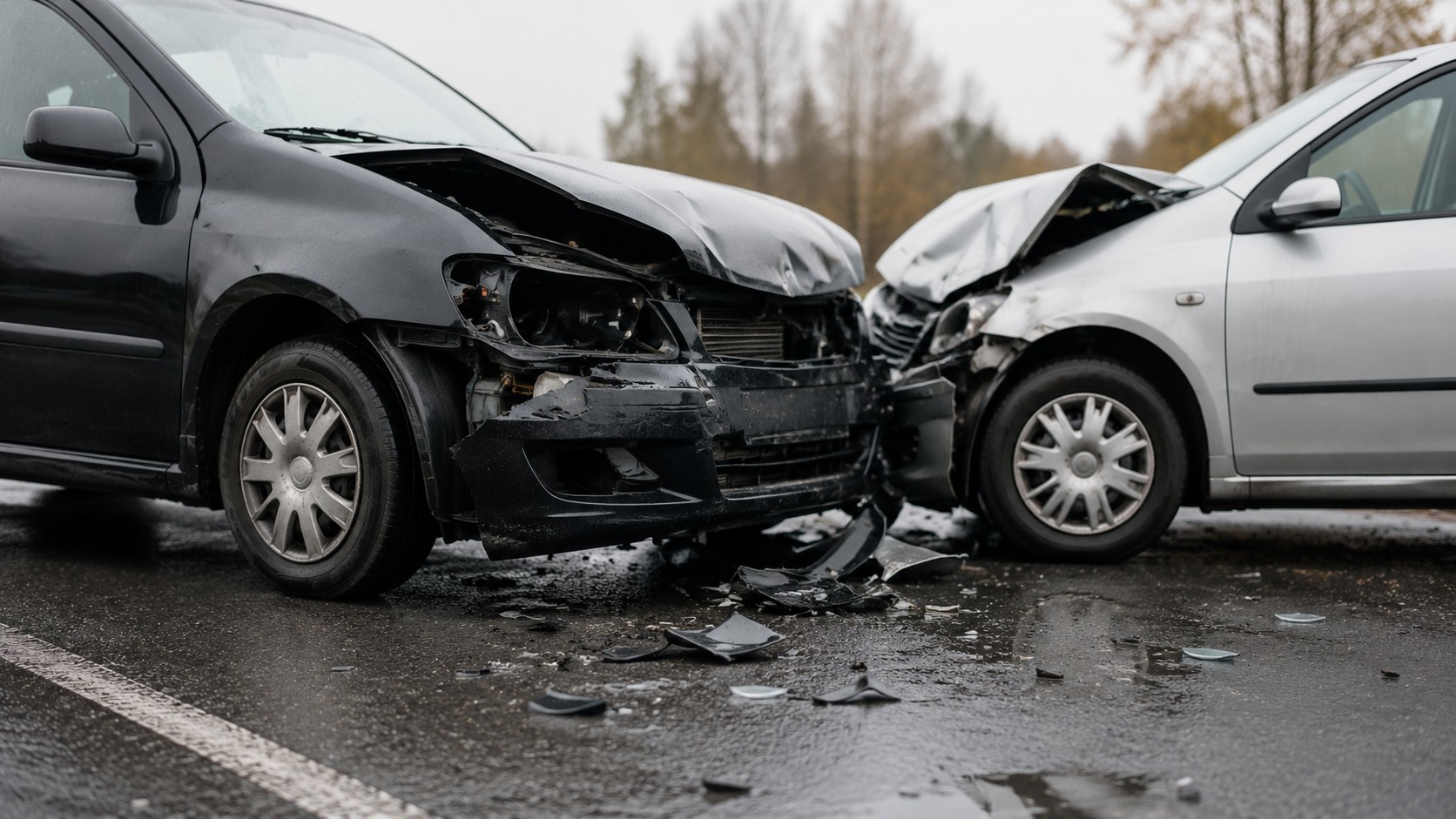
Traffic accidents are one of the most common types of tort encountered in Turkiye. Although most pecuniary losses are covered by compulsory traffic insurance, the pain, grief and violations of personal rights caused by an accident create a category of harm that cannot be measured in money; this harm is remedied through the institution of compensation for non-pecuniary damages.
Non-pecuniary damages claims raise many points of detail in practice: how much to claim, whether the insurance company can be a party to the action, in which court and within what period the action must be filed, and how the limitation period takes shape when a criminal case is opened. In this article we answer these questions systematically within the framework of the legislation and the case law of the Court of Cassation.
The History and Definition of Non-Pecuniary Damages
The origins of non-pecuniary damages reach back to the actio iniuriarum of Roman law; the idea that attacks on personality should be compensated beyond any material loss has been an important cornerstone in the shaping of modern law of obligations. In Turkish law, Article 47 of the repealed Code of Obligations of 1926 regulated the matter systematically; Article 56 of the Turkish Code of Obligations No. 6098 (TCO), which entered into force in 2012, preserved the definition while granting the judge a wider margin of discretion.
Non-pecuniary damages, also known as moral damages, are a legal institution aimed at the at least partial relief of the pain, grief and sorrow felt as a result of unlawful acts such as the violation of bodily integrity, an attack on personal rights, or the death of a relative. Unlike pecuniary damages, they are directed not at a measurable loss but directly at the injury caused to a person's non-material existence. For this reason the basis is not an objective calculation formula but the judge's discretion in the specific case.
In the context of traffic accidents, non-pecuniary damages arise in cases of bodily injury, permanent loss of earning capacity, aesthetic impairment or the death of a relative. They may be claimed by the injured person themselves and, in the event of death, those deprived of support and close relatives may also independently claim non-pecuniary damages.
Factors That Determine the Amount of Damages
Article 56 TCO grants the judge a wide discretion in setting the amount of non-pecuniary damages. This discretion is not arbitrary, however; there are objective criteria shaped by the case law of the Court of Cassation. The principal factors taken into account in practice when setting the amount are as follows:
Degree of fault
The rate of fault of the driver, the operator or the vehicle owner is directly reflected in the amount of damages. There is a significant difference between the damages claimed against a wholly at-fault driver and those claimed against a driver who is 50% at fault. Contributory fault (the injured party's own fault) is also a ground for reduction.
Nature and duration of the injury
The period of temporary incapacity, the rate of permanent loss of earning capacity, any mark or aesthetic impairment left on the body, the duration of treatment and the effects on subsequent quality of life are the basic determinants of the amount. The Court of Cassation consistently stresses that no linear link can be drawn between the disability rate and non-pecuniary damages, but that severe disability will require higher non-pecuniary damages.
Economic and social situation of the parties
The injured party's age, occupation, level of education and social environment, and the wrongdoer's income level and ability to pay, are taken into account in the judge's assessment. The aim here is to satisfy the injured party without unjustly enriching the wrongdoer.
Manner of the event and ancillary factors
The way the accident occurred and aggravating factors such as whether the driver was under the influence of alcohol, speeding, or running a red light are concrete factors that increase the amount of non-pecuniary damages. The Court of Cassation takes the view that, in cases of drink-driving and negligence bordering on intent, the standard amounts of damages should be exceeded.
There is no single mathematical formula for setting the amount of non-pecuniary damages. Even so, precedent-setting amounts have emerged through the decisions of the 4th and 17th Civil Chambers of the Court of Cassation. Supporting the statement of claim with precedent decisions is critically important to steer the judge's discretion correctly.
Are Non-Pecuniary Damages Within the Scope of an Insurance Policy?
The answer to this question depends on which type of insurance is meant.
Compulsory Motor Third-Party Liability insurance (MTPL)
Under the relevant provisions of the Road Traffic Law (KTK) and the General Conditions of Compulsory Motor Third-Party Liability Insurance, MTPL covers only pecuniary losses. The settled case law of the Court of Cassation accepts that non-pecuniary damages fall outside the scope of MTPL. Accordingly, a person harmed in an accident cannot apply to the insurance company to claim non-pecuniary damages; this claim can be directed only against the driver, the operator or the vehicle owner.
The reasoning for this limitation is as follows: the purpose of MTPL is the rapid compensation of the losses arising in the assets of a third party harmed in an accident. Non-material harm, being a violation of the values of personality and impossible to determine in monetary terms in advance, has been left outside the insurer's obligation.
Voluntary Financial Liability insurance (voluntary liability cover)
Drivers or operators may take out voluntary financial liability insurance in addition to MTPL. The scope of this insurance depends entirely on the text of the policy. If it is expressly provided for in the policy, non-pecuniary damages are also accepted within the cover of this insurance. Otherwise, voluntary insurance too is limited to pecuniary loss only.
Practical consequence
The first step for a party claiming non-pecuniary damages because of a traffic accident is to check whether there is a voluntary insurance policy for the vehicle involved in the accident and whether non-pecuniary damages cover is included. In most cases, because only MTPL exists, the claim for non-pecuniary damages is directed not at the insurance company but directly at those who caused the accident.
Standing as Defendant: Should the Insurance Company Be Included?
Identifying the correct defendant in a non-pecuniary damages claim is critically important to keep the action from being delayed. An objection to standing is a frequently encountered line of defense, and an action brought against the wrong defendant is dismissed on the merits.
The driver
This is the person who carried out the act that caused the accident. Where fault is present, they are the first addressee of non-pecuniary damages.
The operator
Under Article 85 of the KTK, the concept of operator means the person who uses the vehicle on their own behalf and account; this is usually the vehicle owner, but not always. Where a rental vehicle is involved, the lessee; where there is a leasing agreement, the lessee under the leasing; and in a commercial enterprise, the enterprise owner may carry the status of operator. The operator has strict liability; they are also liable for the fault of their driver.
The vehicle owner
The vehicle owner is liable where the status of owner coincides with that of operator. Where the owner and the operator are different persons, both may be held jointly and severally liable.
The insurance company (MTPL)
As explained above, because MTPL does not cover non-pecuniary damages, the insurance company is not the correct defendant in a non-pecuniary damages claim. A claim for non-pecuniary damages directed against the insurance company is dismissed on grounds of standing.
If pecuniary and non-pecuniary damages are claimed together in the same action: the insurance company may be named as a defendant for the pecuniary damages; for the non-pecuniary damages, only the driver, the operator and the vehicle owner are defendants. The Court of Cassation considers it necessary that this practice be applied consistently.

Competent Court and Court with Jurisdiction over the Subject Matter
Court with jurisdiction over the subject matter
Damages claims arising from a traffic accident are, as a rule, heard before the civil court of first instance. The jurisdiction of the commercial court of first instance comes into play where both parties are merchants and the dispute is of a commercial nature; however, because damages claims arising from tort are as a rule not regarded as commercial matters, this exception is rarely applied.
Competent court
The relevant venue provision of the Road Traffic Law offers the injured party more than one competent-court option:
- The court of the place where the accident occurred
- The court of the injured party's domicile
- The court of the defendant's domicile
- The court of the place where the insurer's headquarters or branch is located (if the insurance company is a defendant)
This multiple-venue rule is a convenience arranged in the injured party's favour. In practice, most claimants prefer the court of their own domicile.
Limitation: The Relationship Between the TCO and the Criminal Limitation Period
In non-pecuniary damages claims, limitation is one of the most critical matters, in terms of both protecting the right to claim and its potential to cause loss of rights.
General limitation (Article 72 TCO)
For damages claims arising from tort, Article 72 TCO sets a twofold limitation period:
- Subjective limitation: two years from learning of the harm and the wrongdoer
- Absolute limitation: ten years from the date of the event in any case
The right to bring an action lapses when whichever of these two periods expires first.
Application of the criminal limitation period (Article 72(1) TCO)
A critical special rule comes into play here: if the act also constitutes a crime, then where criminal law provides a longer limitation period, the criminal limitation period applies. Because traffic accidents in the great majority of cases constitute the offence of negligent injury or negligent homicide, this provision is decisive in most cases.
Negligent injury (TPC art. 89): The penalty is imprisonment from 3 months to 1 year in its basic form, and from 1 to 3 years where there is conscious negligence or more than one victim. The applicable criminal limitation period under Article 66 of the Turkish Penal Code (TPC) is 8 years.
Negligent homicide (TPC art. 85): The penalty is imprisonment from 2 to 6 years in its basic form; and from 2 to 15 years where there is conscious negligence or more than one victim. The applicable criminal limitation period is 15 years.
Accordingly, a non-pecuniary damages claim for an injury accident may be filed within 8 years of the accident date, and for a fatal accident within 15 years.
The effect of the criminal case
The fact that a criminal case has been opened does not interrupt the limitation period, but neither is the opening of a criminal case a condition for the criminal limitation period to apply. What matters is that the act objectively constitutes a crime.
On the other hand, the civil judge is not bound by the criminal court's assessment of fault (TCO art. 74). In the practice of the Court of Cassation, however, the criminal court's final findings on the material facts are taken into account by the civil court, and the accident report, expert reports and statements in the criminal file are also important evidence in the damages case. For this reason, the criminal file should be followed closely.
A mistake frequently seen in practice: the injured person, believing they can no longer file an action two years after the accident, gives up their right. Yet if the act constitutes a crime, the criminal limitation period applies and the period can extend to as much as 8 or 15 years. For this reason, it is strongly advisable to consult a lawyer to verify any "the two years have passed" assessment.
Frequently Asked Questions
How is the amount of non-pecuniary damages set after a traffic accident?
The amount is assessed by the judge in light of the degree of fault, the severity of the injury, the rate of permanent loss of earning capacity, the economic and social situation of the parties, and the specific features of the case. Established case law stresses that the awarded sum should be satisfactory for the injured party while not impoverishing the party at fault.
Does compulsory liability insurance cover non-pecuniary damages?
No. Under settled case law, compulsory liability insurance covers only pecuniary losses; non-pecuniary damages fall outside its scope. If a voluntary liability policy expressly provides for it, non-pecuniary damages may be claimed within that cover.
Can the insurance company be a defendant in a non-pecuniary damages claim?
For compulsory liability insurance the insurer is not the addressee of a non-pecuniary damages claim, so the action is brought only against the driver, the operator and the vehicle owner. If a voluntary policy covers non-pecuniary damages, the insurer may be named as a defendant limited by the policy limits.
In which court is a non-pecuniary damages claim filed?
Damages claims arising from a traffic accident are heard, as a rule, before the civil court of first instance. There is no exclusive venue; the court of the place of the accident, the domicile of the defendant or the injured party, or the seat of the insurer all have jurisdiction.
What is the limitation period for a non-pecuniary damages claim after a traffic accident?
The general rule is two years from learning of the harm and the wrongdoer, and in any event ten years from the date of the event. However, if the act also constitutes a crime, the longer limitation period set by criminal law applies, which significantly broadens the scope of damages claims in cases of negligent injury or death.
Does filing a criminal case affect the non-pecuniary damages claim?
A civil action may be filed throughout the criminal limitation period. The civil judge is not bound by the criminal court's assessment of fault (TCO art. 74), but the reports and expert opinions in the criminal file are important evidence, so following the criminal file remains an important part of the damages process.
Conclusion
Claims for non-pecuniary damages arising from a traffic accident require care in both their legal framework and their procedural detail. Identifying the correct defendant, analysing the scope of the insurance policy, correctly determining the applicable limitation period and making a claim for an amount supported by precedent decisions are all factors that directly affect the course of the case.
Many injured parties give up their rights on the basis of mistaken assessments such as "the two years have passed" or "insurance does not cover non-pecuniary damages anyway." Yet the long criminal limitation periods and the scope of voluntary insurance policies still leave an effective legal route in most cases.
You may contact us to assess your damages claim arising from a traffic accident and for a preliminary review of your file.
Detailed Information on Non-Pecuniary Damages Claims After a Traffic Accident
Bilkay Legal provides advisory and litigation services in pecuniary and non-pecuniary damages claims arising from traffic accidents.
Related practice area: Contracts & Compensation Law

Leave a Comment
You may share your views and questions about the article. Published comments display only your name and your comment text; other information is kept private so that we can get back to you.
Submitted comments are published after moderation. Your personal contact details (last name, email, phone) are not shared with third parties and are not shown under the comment.